Classic Christmas Movies

By Tyler Vu

Please note that this list is subjective.

Also note, we strongly suggest watching the movies them with a hot drink, warm blankets and good company.

  1. Elf (2003) starring Will Ferrell
    This beautiful coming-of-age story portrays the loss and value of childhood innocence. As a result, Elf has been a contender for this list since the moment it was released.  The story revolves around a misidentified elf attempting to reintegrate himself into human society and find his parents.  Will Ferrell’s performance is just the icing on this Christmas cake.
  1. Home Alone (1990) starring Macaulay Culkin
    A movie so successful that it spawned a trilogy, Home Alone features the ever-witty Kevin McCallister and his defense against a duo of thugs.  It’s a feel-good story about being resolute in the face of daunting adversaries while conquering those them through wit alone. Home Alone embodies the traits we hold dear in society.
  1. It’s a Wonderful Life (1946)
    A relic from a bygone age where color did not exist, It’s a Wonderful Life speaks to all those who sacrifice for the sake of others and their struggle to stay whole. It’s a Wonderful Life follows George Bailey and the impact he has made on the lives of those around him. Although it deviates from the comedic theme of the previous movies, It’s a Wonderful Life is not a movie to overlook this Christmas season.
  1. The Nightmare Before Christmas (1993)
    It may not seem like a Christmas movie, but don’t let the characters fool you. The Nightmare Before Christmas shows that everyone can grow a heart, including skeletons.  The story follows Jack Skellington as he tries to introduce a new holiday and ends up ruining everything.  Whether or not he has a change of heart is the question that leaves us on the edge of our seats.
Winter Holiday Activities

By Michelle Lin

With the holidays just around the corner, you might already be making plans to celebrate the festivities with friends and family! If you haven’t yet given a thought as to what you want to do, the following tips are listed to jump-start some of your ideas to ensure you have a wonderful holiday break.
Don’t want to go out? There are plenty of fun activities to do indoors.

White Elephant. An alternative to Secret Santa, White Elephant consists of players “stealing” gifts from others. Because each gift can only be stolen three times, the game results in fun, playful rivalries between players for sought-after items.

Cozy movie night. With hanging Christmas lights and mugs of tasty hot chocolate, a movie night is the perfect definition of cozy. Pick a fun Christmas movie to watch and huddle around the fireplace if you really want to get comfortable!

Whether you stay in San Jose or go on vacation, there are lots of outdoor activities to do as well.

Christmas in the Park. This classic and fun event is a get-together for all friends and family. Visit the lights that downtown San Jose has to offer, and be sure to taste a sip of the wonderful hot chocolate!

Celebrate the New Year. Visit San Francisco on New Year’s Eve for its wonderful firework celebration atop Twin Peaks, where you’ll be able to see all the fireworks from one of the highest locations in the city. It’s a great chance to spend quality time with friends and family!

Most importantly, make sure to sleep in—a lot! We all deserve it.

Unique present ideas

By Sean Tseng

“Secret Santa is so much work!”
“What’s the point?”
These are the sentiments expressed by most students these days. More and more, gift-exchange activities like Secret Santa and White Elephant are falling out of popularity.
The unspirited epidemic boils down to the struggle of shopping for quality presents. Every year, Christmas becomes a headache for millions of poor shoppers as they scour the malls to find a new, original, out-of-the-box gift.
To all the lost souls looking for gift-giving guidance, here are a few pointers and ideas sure to make you the gift-giver of the town!
Tip: Be personal. The best gifters are sure to know their targets’ favorites: color, animal, food, and so on. Find a way to incorporate at least one thing they’re sure to love into the present. If you can fit several gifts into one theme, even better!
Idea: A panda-loving recipient will definitely appreciate a panda-themed basket with items such as stuffed animals or stationery.
Tip: Experiences are always a welcome change of pace to the usual material present. Try to tailor the experience to your giftee and remember that memories are priceless!
Idea: Concert tickets, activities like ziplining, or even your own “ticket” to a night out or a day on the beach with friends can make the perfect present for someone in need of a break from life’s stresses.
Tip: Another surefire way into your recipient’s heart is something that speaks to their hobbies. Be it writing, photography, dance, sports, or any other passion under the sun, there’s no greater joy than receiving a gift related to someone’s personal love.
Idea: These gifts can range from a nice brush set or a fountain pen to soccer cleats or biking equipment.
Tip: Help them with a problem. Life is full of inconveniences, but that’s not what Christmas should be about. Keep a sharp eye out for any issue that crops up often in your giftee’s life and swoop in on Christmas Day with a solution! Even gifts that solve the most minor inconveniences can make a silly but useful present.
Idea: An electronic tracker would help anyone prone to losing things, while a cookie-dunker can solve problems they never even knew they had.

Thanksgiving trivia: fact or fiction

By Sophia Xiao

Think you know everything there is to know about this All-American holiday that began with the pilgrims?  Think again.

Fact or fiction?

  1. Thanksgiving turkey is actually named after the Turks.
  2. Beginning on Thanksgiving, people gain an average of five to seven pounds over the holidays.
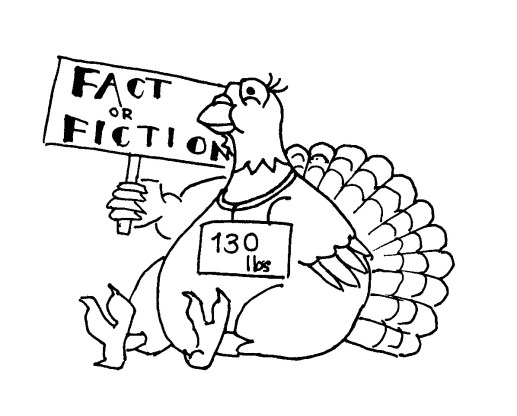
  3. The largest turkey ever recorded was 130 pounds!
  4. Native Americans used cranberry sauce to treat wounds.
  5. Cranberries’ closest relatives are watermelons.
  6. We are half pumpkin.
  7. Thanksgiving is on the last Thursday of November.
  8. A chemical in turkey called tryptophan is what makes you sleepy after a Thanksgiving meal.

Answers:

  1. FACT – Turkey is actually named after the Turks! But like all events in history, it is kind of a long story…  According to the New York Times, merchants from Turkey brought guinea fowl (originally from Madagascar) into England, where it became very popular.  Since the merchants were from Turkey, the bird came to be known as the turkey. When the actual “turkey” was brought to England from the New World, they tasted just as delicious as guinea fowl (or turkey then), and so the English called it “turkey” as well without much scrutiny.  When they finally sorted out the differences, they were too lazy to change the name, and thus, the American bird came to be named after a Middle Eastern country!
  2. FICTION – A study published in the National Library of Medicine on holiday weight gain measured body weight in a convenience sample of 195 adults. It turns out the media exaggerates, people gain “only” an average of one pound throughout the holidays.  But all is not well.  “Since this gain is not reversed during the spring or summer months, the net 0.48-kg weight gain in the fall and winter probably contributes to the increase in body weight that frequently occurs during adulthood,” states the study.
  3. FICTION – According to the Guinness World Record, the largest turkey recorded was “just” 87 pounds. For a bird though, that’s still pretty big…
  4. FACT- Native Americans did use this Thanksgiving classic to heal wounds! They used a cranberry poultice as medicine to fight bacterial infections.  According to the Huffington Post, “that was a smart strategy, as cranberries have a compound that prevents common bacteria like E. coli and Staph from attaching to the walls of tissue cells.”
  5. FICTION– Are you crazy? Watermelon might be a berry, but it’s definitely not the closest relative to cranberries.  In fact, the real stars of your grandmother’s Thanksgiving sauce are the closest in relation to blueberries, not watermelons (The Huffington Post).
  6. FICTION – But not for the reasons you might think: Genetically, our makeup is actually 75% the same as a pumpkin (TheHumanGenome)!
  7. FICTION – It is actually on the fourth Thursday of November. Honestly though, who cares other than that Thanksgiving is whenever those glorious days of no school and feasting happens.
  8. FICTION – Sure, turkey does have a chemical, tryptophan that can make you sleepy. But so do chicken, nuts and red meat, which all have more tryptophan than turkey, based on Healthaliciousness’ findings.  Yet we don’t see you complaining about drowsiness after every time you eat sunflower seeds!  The after-meal drowsiness you get on Thanksgiving night is most likely just due to overeating.  So if you don’t want to feel so tired after Thanksgiving dinner, don’t just lay off the tryptophan, cut back on overall consumption!

tuekyho

Gobble, gobble

cs-charliebrown2-emilyzhao

By Hannahjane Arellano

Thanksgiving is a time when you gather around the dinner table with your friends and family and share what you’re thankful for.  But what makes hanging around your loved ones better?  FOOD!  Here are some recipes that you and your family can surely gobble up:


Cranberry Crescent Rolls

Ingredients:

  • 1 pack of Pillsbury Crescent Rolls
  • Homemade or canned cranberry sauce
  • 1 egg, whipped

Instructions:

  1. Preheat oven according to directions on the package of crescent rolls.
  2. Separate crescent rolls into individual rolls.
  3. Use a spoon to put about 1/2 tablespoon of cranberry sauce on the thickest portion of the crescent rolls.
  4. Carefully roll the crescent roll over the cranberry sauce and into a crescent shape.
  5. Brush the tops of each crescent roll with the egg wash.
  6. Bake according to package directions.
  7. Allow to cool a few minutes before serving.

(News Talk Florida)


Garlic and Chive Mashed Potatoes

Ingredients:

  • 4 pounds of Yukon Gold potatoes (ten potatoes), peeled and quartered
  • 1 cup of milk
  • 2 garlic cloves smashed
  • 3 tablespoons of butter
  • 1/4 cup of sour cream
  • 1 tablespoon of fresh chives and a little extra for garnish
  • 1 teaspoon of salt
  • 1/8 teaspoon of ground pepper

Instructions:

  1. Wash, peel and quarter your potatoes. Place them in a medium pot and cover with water.  Bring to a boil, then cook for 12-14 minutes until tender.
  2. While potatoes are cooking, in a small pot, bring to a boil 1 1/3 cup of milk with two smashed garlic cloves. As soon as the milk starts to boil, remove from heat and let it stand.
  3. Remove cooked potatoes after 12-14 minutes from heat and drain them. First mash them with a potato masher, then with a hand mixer.  Mash them in the same pot.  Place mashed potatoes back on the stove over medium heat and stir them constantly for about two minutes until they are slightly dry.  Remove from heat.
  4. Add milk mixture to the mashed potatoes, but discard the garlic cloves. Add three tablespoons of butter, either melted or at room temperature, along with a fourth of a cup of sour cream, one teaspoon of salt and one tablespoon of chives.  Season with some pepper and mix everything together until well combined.
  5. Serve warm and garnish with chives.

(Natasha’s Kitchen)

Thanksgiving traditions

By Erica Xie

Fall is here, and the start of the holiday season begins with Thanksgiving.

“(When I think of Thanksgiving), I think of turkey, football, a potluck and just family coming together,” shares junior Vy Truong.

Thanksgiving is a holiday synonymous with a feast, including, but not limited to turkey, mashed potatoes and gravy, dinner rolls and pumpkin pie that the whole family can enjoy.  This is also a time when families try to get together, even if they are busy or do not get along.

“My siblings and I try to get together at least once a year, but it’s hard since our schedules don’t match,” explains American Government teacher Lynne Murray.

However, not all people celebrate Thanksgiving the same; different cultures have changed the holiday’s traditions.  Many families have mended this day to their tastes, which encompasses the melting pot of ideals that is America.

“Most of my family is in China so we don’t have a big feast.  Instead, we go to my neighbor Lina’s house to eat chicken and other Chinese dishes that my mom makes,” explains senior Angela Du.

The commercialist culture of America also alters the holiday in the form of Black Friday.  Black Friday is the Friday after Thanksgiving that involves some of the biggest sales of the year and some people even include shopping as part of their Thanksgiving traditions.

“It’s sad that some stores open on Thanksgiving so (people) leave Thanksgiving dinner early to work or shop,” laments Angela.  “It takes away from the feeling of giving thanks.”

Others have different views about this day.

“I think (Black Friday’s) great because giving thanks is about thanking all the things that you have, and with Black Friday you can get more things to be thankful about.  Also, on Black Friday (we) usually have a family plan. One person gets a TV, and the other gets a laptop.  So really, it brings our family closer together,” replies senior Jennifer Lai.

Through all the changes, the core of Thanksgiving tradition remains: the concept of giving thanks.

“I’m glad that there’s at least one day in the year where people can come together with their families and give thanks,” maintains Ms. Murray.

So this Thanksgiving, remember to not only eat good food, chat with family members and shop for deals, but to also call up a friend or look your parents in the eye and thank them for all that they’ve done for you.

Holiday dinner etiquette

By Syed Rahim

Thanksgiving, with all its customs and traditions, is a tough holiday to understand.  Every family is different, and one with its own set of intricacies.  Navigating the maize (pun intended) of etiquette for this festive holiday can be tough, which is why The Legend staff has compiled some tips to guide you, courtesy of the Piedmont Hills student body.

“You pretend to know everyone even if you don’t remember them,” says junior Caroline Chou

This is a great strategy for the absent-minded, which is why it works wonders on long forgotten third cousins and friends of family who just show up.  An alternate strategy for forgetting someone’s name is referring to them as “old sport.”

“Just offer people things until everyone is comfortable,” suggests junior Bendon Tran.

This is generally sound advice for any party that you’re hosting.  The spirit of giving and taking is no more celebrated than on Thanksgiving, when we remember European settlers peacefully taking advantage of Native peoples.  Friends like to be offered delicious things like bananas, apples and mayonnaise.  Unfortunately, these foods may not be the right fit for everyone, which is why you should experiment with others and see what people accept.  Just know when to stop.

“Offer to clean up after the meal,” states junior Parmpreet Gill.

Cleaning up is often the most tedious part of a good Thanksgiving dinner.  Being a good friend means offering to tidy up the table, even if it means spending a few extra hours interacting with people you dislike.  If you’re the host of a Thanksgiving feast, you can always opt out of clearing the table.  This means exiting the dining room, waiting one year and reemerging to give thanks once more.  This method is not recommended for various reasons, and it’s probably illegal in some states.

Hopefully this guide helps you in some way, because we get it: Thanksgiving is scary.  The dizzying arrays of mashed potatoes and “gravy” flood the senses like no other day of the year.  But there is hope yet.  Thanksgiving is about giving, and giving is about compromise.  Compromise means wearing a smile on your face as you wade through puddles of small children.  This Thursday, remember to give thanks for the privilege of being miserable.

History of Thanksgiving

By Mae Castellano

Thanksgiving started 396 years ago in 1620.  It began when the Mayflower left Plymouth, England, with the voyage lasting 66 days and carrying 102 passengers.

The Plymouth colonists arrived to Cape Cod on Nov. 11, 1620.  The colonists were originally supposed to settle near the Hudson River but were forced to settle near Cape Cod because of poor winds.

According to history.com, after five months in New England, the Plymouth colonists, later known as Pilgrims, first made contact with a Native American: an Abenaki Indian.  A few days later, the Abenaki Indian came back with Squanto, a member of the Pawtuxet tribe.

Squanto began to teach the Pilgrims different skills, including cultivating corn, extracting sap from maple trees, catching fish in rivers and avoiding poisonous plants.  Most importantly, Squanto helped forged an alliance with the Wamponoag tribe which lasted for more than 50 years.

In November of 1621, former Plymouth Colony Gov. William Bradford organized a celebratory feast for the Pilgrims’ first successful corn harvest, and invited their allies.  The feast lasted three days and is acknowledged as one of the first Thanksgiving celebrations in the colony.

The Pilgrims’ second Thanksgiving occurred in 1623.  It was a feast to celebrate and mark the end of a long drought that threatened the year’s harvest.

166 years later, in 1789, former United States Pres. George Washington issued the first Thanksgiving proclamation.  He asked Americans to express their gratitude for the happy conclusion of the country’s war.

Following that event in 1817, New York was the first of many states to adopt an annual Thanksgiving holiday.

Wanting Thanksgiving to become a national holiday, magazine editor and prolific writer Sarah Josepha Hale launched a campaign in 1827.  She was insistent for 36 years, and finally 16th Pres. Abraham Lincoln heeded her wish in 1863.

Lincoln scheduled the final Thursday of November as Thanksgiving.  This trend was celebrated up until 1939, when former Pres. Franklin D. Roosevelt moved the holiday up one week to attempt to spur retail sales during the Great Depression.

This plan was met with opposition, so he reluctantly signed a bill in 1941 to have the celebration of Thanksgiving be held on the fourth Thursday of November, and the date has been celebrated since.

History of Halloween

By Ashliana Rodriguez

Halloween, also known as All-Hallows Eve, originated 2,000 years ago by the ancient Celtic festival of Samhain in Ireland, the UK and Northern France.  Celebrating the New Year and the day of the dead, Celtics believed the ghost of the dead returned to the land of the living.  The Celtics built bonfires to burn sacrifices such as crops and animals to the Celtic deities.  They wore costumes such as animal heads and skins and tried to tell one another’s fortune.  When night came they relit the bonfire to protect them from the winter that was coming.

When Christianity spread through the Celtic lands, it was believed that the Christians tried to replace the festival with a church stationed holiday.  The Christians had a similar holiday to the Celtics festival, but it was held on Nov. 2 called All Souls Day.  They dressed up as saints, devils and angels while having parades and bonfires.  Additionally, there was All Saints Day, which was held on Nov. 1, the night before the Celtic festival of Samhain.  Eventually, All Saints Day turned into All-Hallows Eve, and finally, Halloween.  By this point, Halloween was known throughout all of Europe, and Europeans immigrating to America brought the idea of Halloween with them.

Protestants were skeptical of Halloween, so the holiday was limited throughout the colonies.  It became more common in Maryland and Southern colonies.  The American Indians were there when the Europeans immigrated, so the two cultures combined their versions of Halloween.  By the nineteenth century, immigrants spread throughout America.   Americans took the idea of dress up and going door to door asking for food and money from the English and Irish, which is  now known as “trick-or-treat.”

Halloween eventually turned into more of celebration of parties and handing out candies, losing its religious and superstitious aspects.  It has evolved throughout the years from celebrating the change of seasons to dressing up and collecting candy.

Today, Halloween is the country’s second largest commercial holiday.

Global Halloween

cs-08-globalhalloween-sophia-xiao-f

By Sophia Xiao

Here, the smell of pumpkins and irresistable chocolate fill the night.  There, it’s the aroma of candy skulls and tortillas.  Elsewhere, the smoke of burning incense swirls through the air.  Every culture seems to have their own unique “Halloween,” yet each and every celebration commemorates the same people: the dead.

Observed primarily in Mexico and Latin American countries, Days of the Dead refers to the three-day celebration from Oct. 31 to Nov. 2.

“Nov. 1 is All Saints Day, which is usually for all the babies and children who have passed away,”  explains Spanish teacher Edith Sousa.

Nov. 2, Day of the Dead, is for the rest of the deceased.  People build altars, clean graves and decorate the cemetery with candles, papel piacdo and marigolds.

“Everyone gets together in the cemetery, but it’s not a day of sorrow and it’s not a day of being scared or scaring people,” clarifies Ms. Sousa.  “For them it’s a day that their spirits come back to earth to spend time with them.”

In the Philippines, people also celebrate All Saints Day and All Souls Day because of the area’s strong Catholic roots. However, in much of the rest of Asia, cultures have their own holidays for honoring their ancestors.

“For example, in Qingming Festival, a lot of our family comes together to the place where our ancestors are buried.  We clean their graves and give offerings to them such as fruit, candy, and burn paper offerings for them… so that they can have these things in the afterlife,” recounts sophomore Emily Liu about different Chinese holidays.

American Halloween still vaguely represents the original idea of appreciation for the afterlife, but its core essence, unlike most other countries, is no longer about the dead.

“But it’s commercial and people like it.  It’s fun, and so for adults it’s a time to party; for kids it’s a time to get candy,” laughs social science teacher Joshua Berry.

“I think it’s cool that Halloween is spreading out to all these different cultures, and that’s something that can bring all of us together in a way,” agrees sophomore Karely Ruvalcaba.